
Paprika
Capsicum annuum L. (sweet, non-pungent types)
Fine, homogeneous powder
- Document
- OH-SPEC-PAP-01
- HS code
- 0904.22
- Harvest
- June to November
- Shelf life
- 24 months

Written specification, OH-SPEC-PAP-01.
Issue 01 · the full sheet below, or download it as PDF for your supplier file.
01Product Identification
- Product name
- Egyptian Paprika
- Botanical name
- Capsicum annuum L. (sweet, non-pungent types)
- Plant family
- Solanaceae
- Part used
- Dried ripe fruits (pods), seeds partly removed
- Form / cut
- Ground powder; crushed and whole pods on request
- HS code (reference)
- 0904.22 *
- Country of origin
- Egypt
- Country of processing
- Egypt
- Harvest season
- June to November
- Treatment status
- Not heat treated, not irradiated, not fumigated with ethylene oxide. Steam-sterilised grade available on request.
02Description of Processing
- 1Harvest & drying
Ripe red pods are harvested, sun-dried, de-stemmed and cleaned.
- 2Receiving
Each lot is opened, sampled and checked against the purchase grade (appearance, odour, moisture, foreign matter).
- 3Pre-cleaning
Multi-deck sieve pre-cleaner with de-stoner and dust aspiration.
- 4Grading
Air classifier, indent cylinders and gravity separator remove stems, broken parts and heavy foreign matter.
- 5Milling & sieving
Pods are ground in a cooled stone/hammer mill and sieved; colour and pungency are blended to grade.
- 6Hand inspection
Final inspection belt fitted with high-intensity magnets.
- 7Metal detection
Every packed unit passes through a calibrated metal detector.
- 8Packing
Packed in clean, food-grade packaging, labelled with lot code and stored on pallets.
03Sensory & Physical Characteristics
- Appearance
- Fine, homogeneous powder
- Colour
- Bright red to deep red
- Flavour
- Sweet, fruity, non-pungent to mildly pungent
- Odour
- Characteristic of paprika; no musty, burnt or foreign odours
- Texture
- Dehydrated, free-flowing
04Analytical Values
| Parameter | Minimum | Maximum | Method |
|---|---|---|---|
| Moisture (% w/w) | — | 11.0 % | ISO 939 |
| Extractable colour (ASTA units) | 80 | 160 | ASTA 20.1 (grade on request) |
| Total ash (% w/w) | — | 9.0 % | ISO 928 |
| Acid-insoluble ash (% w/w) | — | 1.0 % | ISO 930 |
| Pungency (SHU) | — | 1,500 | HPLC (ISO 7543-2) |
Smoked paprika is not covered by this specification. Colour (ASTA) grade agreed per order.
Mycotoxins
| Mycotoxin | Maximum |
|---|---|
| Aflatoxin B1 | 5 µg/kg |
| Aflatoxins total (B1+B2+G1+G2) | 10 µg/kg |
| Ochratoxin A | 20 µg/kg |
Aflatoxins and ochratoxin A in accordance with Regulation (EU) 2023/915 for Capsicum spp. (dried fruits, whole or ground, including chillies, chilli powder, cayenne and paprika).
05Physical Values & Foreign-Body Control
| Parameter | Target | Minimum | Maximum |
|---|---|---|---|
| Particle size | 98 % < 500 µm | — | — |
| Extraneous matter | — | — | < 0.5 % |
| Foreign material (stones, glass, metal, insects) | — | — | Absent |
| Metal Detection – Test Pieces | Ferrous (Fe) | Non-Ferrous (Non-Fe) | Stainless Steel (Ss) |
|---|---|---|---|
| Metal detector, every packed unit | 1.5 mm | 1.5 mm | 2.0 mm |
High-intensity magnets are fitted at the sorter inputs and outputs and on the final inspection belt. Rejected units are quarantined and investigated.
06Microbiological Values
| Organism | Maximum (Cfu/G) |
|---|---|
| Total viable count (TVC) | 10⁶ |
| Coliforms | 10⁴ |
| Bacillus cereus | 10³ |
| Escherichia coli | 10³ |
| Salmonella spp. | Absent in 25 g |
| Yeasts | 10⁵ |
| Moulds | 10⁵ |
Methods: ISO 4833-1 (TVC), ISO 4832 (coliforms), ISO 21528-2 (Enterobacteriaceae), ISO 7932 (B. cereus), ISO 16649-2 (E. coli), ISO 6888-1 (coagulase-positive staphylococci), ISO 6579-1 (Salmonella), ISO 21527 (yeasts & moulds), carried out by an accredited external laboratory.
07Contaminants & Residues
- Pesticide residues
- Within the maximum residue levels of Regulation (EC) No 396/2005 and retained UK legislation. A multi-residue screen is available per lot on request.
- Heavy metals
- Lead ≤ 0.60 mg/kg (dried fruit spices); cadmium and mercury in accordance with Regulation (EU) 2023/915 and current UK contaminants legislation.
- Pyrrolizidine alkaloids
- No EU maximum level applies to this product. Weed control in the field and cleaning/sorting minimise PA-containing weed seeds and plant parts.
- Illegal dyes
- Sudan I–IV, Sudan Red 7B, Para Red, Rhodamine B, Orange II and other non-permitted colours: absent (each < 0.5 mg/kg). No colours of any kind added.
- Polycyclic aromatic hydrocarbons
- Benzo(a)pyrene ≤ 10 µg/kg and sum of 4 PAH ≤ 50 µg/kg, in accordance with Regulation (EU) 2023/915.
- Ethylene oxide
- Not used at any stage. Product complies with the EU MRL for ethylene oxide (sum).
- Irradiation
- The product is not irradiated and contains no irradiated ingredients.
08Nutritional Information
typical values per 100 g
| Nutrient | Per 100 G |
|---|---|
| Energy | 1180 kJ / 282 kcal |
| Fat | 13 g |
| of which saturates | 2.1 g |
| Carbohydrate | 54 g |
| of which sugars | 10 g |
| Protein | 14 g |
| Salt | 0.17 g |
Typical values from USDA FoodData Central (SR Legacy) reference data for the dried product; not a guaranteed analysis.
09Allergen Information
| Allergen (Annex II, Reg. (EU) 1169/2011) | In product | On site | Processed on site | Supply-chain risk |
|---|---|---|---|---|
| Cereals containing gluten (wheat, rye, barley, oats, spelt, kamut and products thereof) | No | No | No | No |
| Crustaceans and products thereof | No | No | No | No |
| Eggs and products thereof | No | No | No | No |
| Fish and products thereof | No | No | No | No |
| Peanuts and products thereof | No | No | No | Yes |
| Soybeans and products thereof | No | No | No | No |
| Milk and dairy products (including lactose) | No | No | No | No |
| Tree nuts (almond, hazelnut, walnut, cashew, pecan, Brazil nut, pistachio, macadamia, Queensland nut) | No | No | No | Yes |
| Celery and products thereof | No | Yes | Yes | No |
| Mustard and products thereof | No | No | No | No |
| Sesame seeds and products thereof | No | Yes | Yes | No |
| Sulphur dioxide and sulphites (> 10 mg/kg or 10 mg/L as SO₂) | No | No | No | No |
| Lupin and products thereof | No | No | No | No |
| Molluscs and products thereof | No | No | No | No |
- Allergens in product
- None
- * Supply-chain note
- Traces of peanut and tree-nut protein cannot be fully excluded because herbs are grown, harvested, transported and stored in open agricultural environments.
- Allergen control on site
- Celery and sesame seeds are handled on site. Segregated storage, scheduled production with validated cleaning between products, and trained staff are used to prevent cross- contact.
- ‘May contain’ advice
- May contain traces of peanuts and tree nuts due to agricultural and environmental cross- contamination. Customer to risk-assess for final labelling.
10Product Suitability
| Diet | Suitable | Certificate |
|---|---|---|
| Vegetarians | Yes | — |
| Vegans | Yes | — |
| Kosher | Yes | Available on request |
| Halal | Yes | Available on request |
| Coeliacs (gluten-free) | Yes | — |
| Organic | On request | Organic grade available from certified farms |
11Statements
- GMO (Reg. (EC) 1829/2003 & 1830/2003)
- Neither the product nor any component is produced from genetically modified varieties: Yes. Produced from identity-preserved raw materials: No. Produced from raw materials of GM origin: No. Requires GMO declaration: No.
- Nut and peanut
- Orient Herbs does not process peanuts or tree nuts. Because many herbs are grown and transported near nuts and peanuts at origin, and containers are outside our control, we cannot give a categorical nut-free guarantee.
- Infestation
- Goods are cleaned and inspected but, unless heat- or vacuum-treated, cannot be guaranteed free from later infestation. Store as stated below.
- Foreign matter
- Glass and brittle-plastic policy, pest-control programme and metal detection are in place under our HACCP-based food-safety management system.
12Packing, Labelling & Traceability
- Standard packing
- Multi-wall paper bags with food-grade PE liner, 25 kg net per bag. Cartons on request.
- Palletising
- Clean, fumigated or heat-treated (ISPM 15) wooden pallets, stretch-wrapped.
- Label on each unit
- Product name, botanical name, lot number, net weight, production date, best-before date, country of origin and buyer’s shipping marks.
- Traceability
- Lot code links each unit to farm / grower, harvest date, processing batch and laboratory results. Mock recall tested at least once a year.
- Documents per shipment
- Certificate of analysis per lot, phytosanitary certificate, certificate of origin (EUR.1 where applicable), packing list and commercial invoice.
13Storage & Shelf Life
- Storage
- On pallets in cool, dry, hygienic, pest-controlled conditions; away from direct sunlight and strong odours. Recommended < 25 °C and < 65 % RH.
- Shelf life
- 24 months from production in unopened original packaging. Delivered with at least 75 % of shelf life remaining.
14Compliance & Certification
- Legislation
- The material complies with all relevant EU and UK food legislation for dried spices at the date of issue.
- Factory
- HACCP-based food-safety management system; current certificates available on request.
- Farms
- Selected Egyptian growers working to Good Agricultural Practice (GAP), with farm-level traceability.
- Quality control
- Each lot is checked on receipt, during processing and before release. Retained samples are kept for the full shelf life.
About Egyptian paprika.
What forms of Egyptian paprika do you supply?
Ground powder; crushed and whole pods on request. Other cuts can be agreed in writing before production.
When is paprika harvested in Egypt?
June to November. Dried material is available year-round, subject to stock.
What is the HS code for dried paprika?
For reference, 0904.22. Your customs broker should confirm the classification for your market.
Does your paprika meet EU pesticide limits?
Within the maximum residue levels of Regulation (EC) No 396/2005 and retained UK legislation. A multi-residue screen is available per lot on request.
What is the shelf life of paprika?
24 months from production in unopened original packaging. Delivered with at least 75 % of shelf life remaining.
How is paprika packed for export?
Multi-wall paper bags with food-grade PE liner, 25 kg net per bag. Cartons on request.
What is the minimum order for paprika?
1 MT per product; you can combine several products in one 20ft or 40ft container.
More from this family.


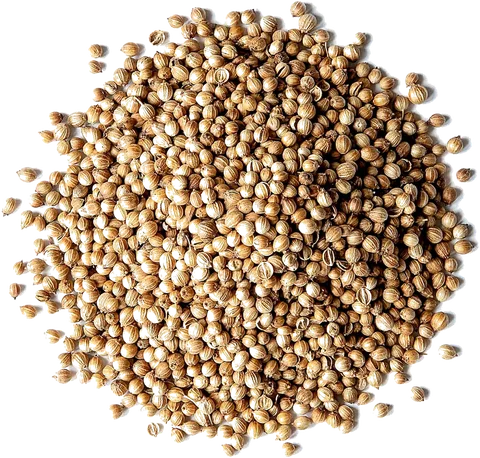
Coriander Seeds
Coriandrum sativum L.
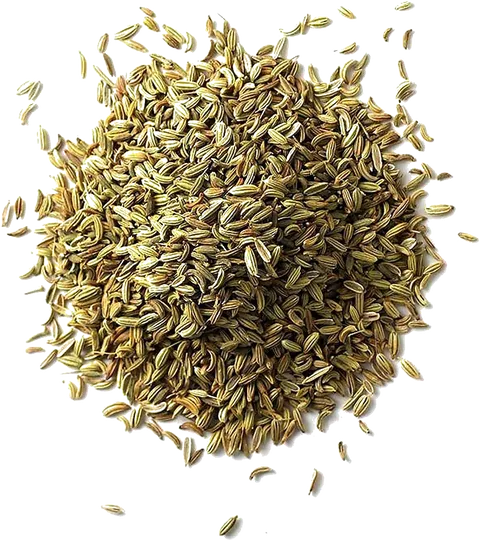
Fennel Seeds
Foeniculum vulgare Mill.
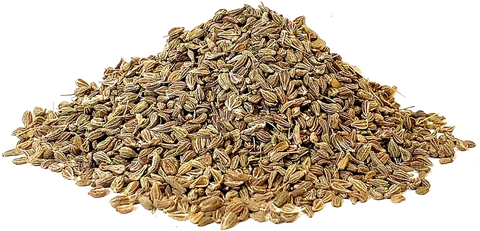
Anise Seeds
Pimpinella anisum L.Quote paprika for your next shipment.
Choose products, forms and quantities. Our export team replies by email with prices, availability and specifications, usually within one working day.